
Architectural Heritage
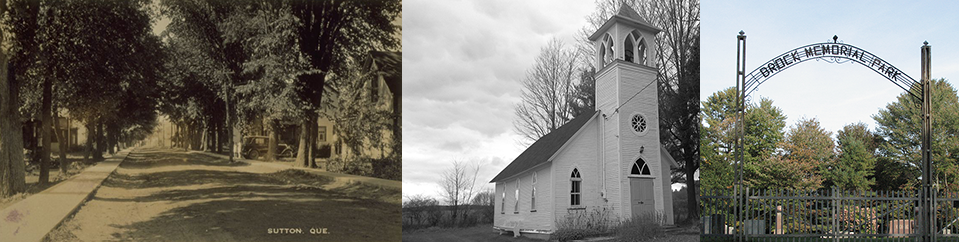
Do we have enough old and well-preserved buildings in Sutton to talk about a rich “built heritage”? Is this heritage well-protected? What work has been done to document it? What are the first steps? These questions served as the starting point for the firm Patri-Arch, commissioned by Sutton in 2013 to develop a framework for managing the town’s built heritage. We now have a complete picture of the status of our municipality in terms of heritage and the concrete actions required to educate the populace and raise awareness of what makes us stand out.
Built heritage inventory
Following the creation of its built heritage management framework, the Town of Sutton undertook to inventory buildings of heritage value (historical, architectural, functional) within its territory. The inventory work, which took place from 2014 to 2021, was carried out by the Patri-Arch firm. It includes 409 files summarizing the architectural characteristics of each of the buildings identified.
With a heritage rating assigned to each of the buildings inventoried, this inventory provides better support for the work of the Urban and Land Use Planning Department and allows for better targeting of buildings to be highlighted, for example through heritage tours.
- Learn how a building's heritage rating is determined
- Find out about the styles and features of Sutton's architecture
- To read Patri-Arch full report (in French only)
- To view the inventory list (in French only). For more information, contact the Town hall.
- Exceptional Buildings
Funerary Heritage
Did you know there are 17 cemeteries in Sutton? Some contain only a few tombstones and others thousands. Seven are still in use, while others have been closed to new burials for a long time.
The initial inventory phase and historical research of the Heritage Sutton Historical Society, was completed in 2013 and provided information about Sutton’s founders, as well as the town’s first French-Canadian inhabitants and the military. The second phase, completed in 2016, documented the history of some former hamlets in the Township of Sutton.
In 2012, the Town adopted Sutton’s Cemetery Maintenance and Conservation Policy. Several Sutton cemeteries contain the remains of Sutton’s founders, as well as the first French-Canadian inhabitants. Preserving the last evidence of their lives is a way to honor to them and an act of respect for descendants who may wish to visit the graves of their ancestors.